


Page 74 - Senior Link Magazine Summer 2026 - Online Magazine
P. 74
SENIOR RESOURCES


            Practical Ways to


            Care for                                        Caregivers


                                                               Reaching out early can help prevent burnout and
                                                               improve both the caregiver’s well-being and the quality of
                                                               care provided. Fortunately, many resources are available
                                                               to support caregivers, including respite care, educational
                                                               programs, support groups, and assistance through local
                                                               community organizations. These services are designed
                                                               to provide relief, guidance, and reassurance, helping
                                                               caregivers feel supported, informed, and better equipped
                                                               in their caregiving journey. The Area Agency on Aging–
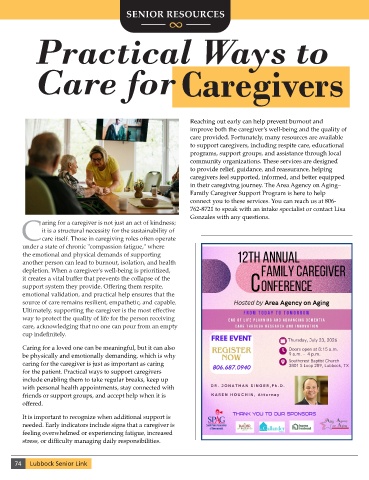
                                                               Family Caregiver Support Program is here to help
                                                               connect you to these services. You can reach us at 806-
                                                               762-8721 to speak with an intake specialist or contact Lisa
                                                               Gonzales with any questions.
               aring for a caregiver is not just an act of kindness;
               it is a structural necessity for the sustainability of
        Ccare itself. Those in caregiving roles often operate
        under a state of chronic "compassion fatigue," where
        the emotional and physical demands of supporting
        another person can lead to burnout, isolation, and health
        depletion. When a caregiver’s well-being is prioritized,
        it creates a vital buffer that prevents the collapse of the
        support system they provide. Offering them respite,
        emotional validation, and practical help ensures that the
        source of care remains resilient, empathetic, and capable.
        Ultimately, supporting the caregiver is the most effective
        way to protect the quality of life for the person receiving
        care, acknowledging that no one can pour from an empty
        cup indefinitely.

        Caring for a loved one can be meaningful, but it can also
        be physically and emotionally demanding, which is why
        caring for the caregiver is just as important as caring
        for the patient. Practical ways to support caregivers
        include enabling them to take regular breaks, keep up
        with personal health appointments, stay connected with
        friends or support groups, and accept help when it is
        offered.

        It is important to recognize when additional support is
        needed. Early indicators include signs that a caregiver is
        feeling overwhelmed or experiencing fatigue, increased
        stress, or difficulty managing daily responsibilities.


      74   Lubbock Senior Link

